
Quick answer
What is OmniHear, in one paragraph?
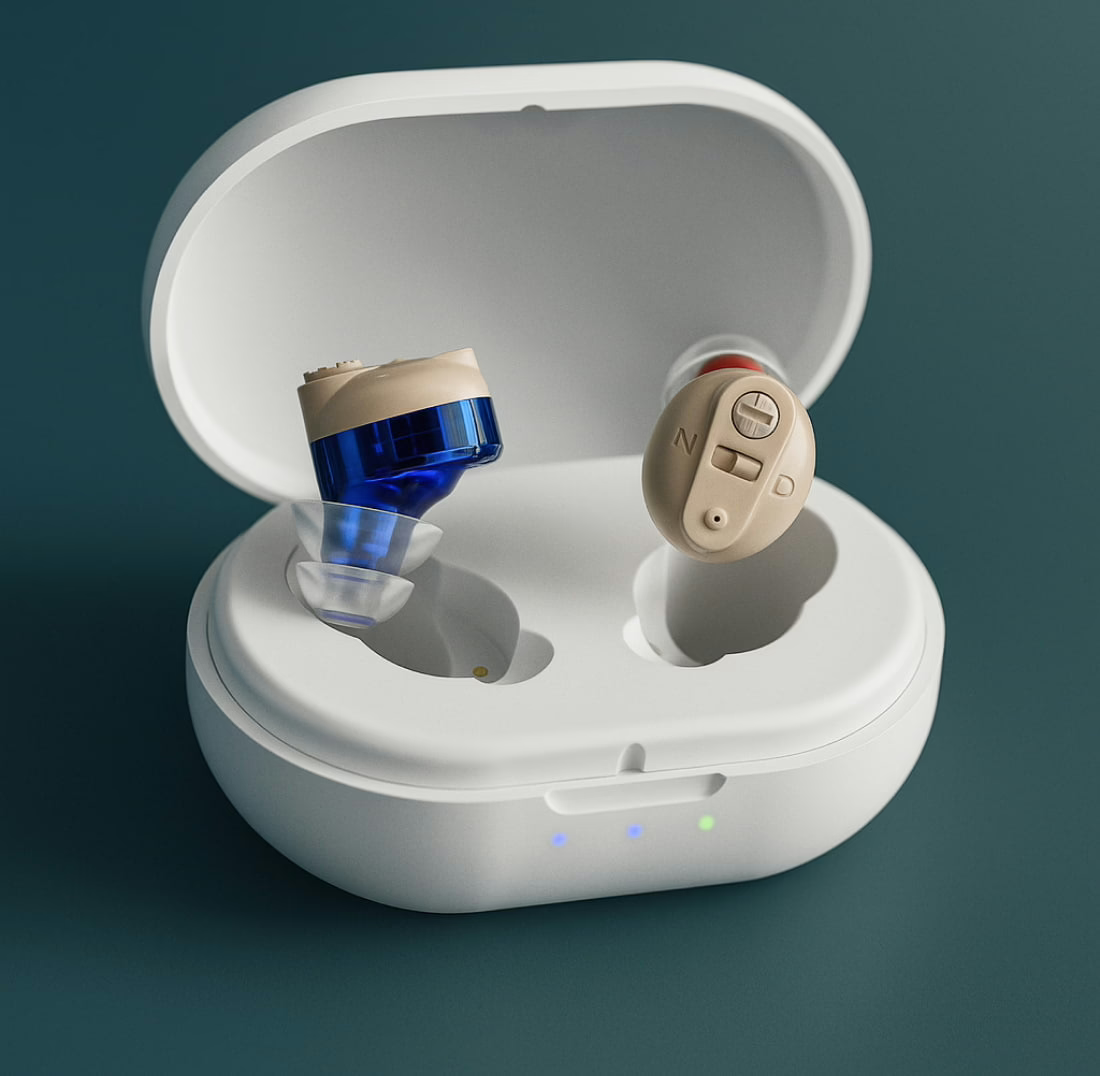
OmniHear is marketed as a small, rechargeable in-ear hearing device sold directly to consumers online and positioned for adults with perceived mild-to-moderate hearing loss. The seller describes it as ready to wear without a hearing test or professional fitting.
According to OmniHear's current product information
A rechargeable device with adjustable volume, interchangeable ear tips, a portable charging case, and setup intended to be done by the buyer at home.
Independent information we could verify
That the product is actively sold direct-to-consumer with published policies. We found no published clinical study specific to this device, and independent third-party review volume is small relative to the reviews hosted on the seller's own site.
What is OmniHear?
OmniHear is a consumer hearing device sold online through a direct-to-consumer store. According to the current product information, it is a self-contained in-ear unit: a microphone picks up sound, onboard electronics amplify and process it, and a small speaker delivers the result into the ear canal through a replaceable ear tip. There is no clinic visit, audiogram, or professional programming step in the advertised purchase flow.
Everything above is a description of how the product is marketed. We did not physically test a unit, and nothing on this site should be read as a measurement of real-world performance. Our review methodology explains exactly what we do and do not check.
Who is OmniHear marketed for?
The seller's positioning targets adults who notice difficulty following conversation, television or group settings and who want a lower-cost, no-appointment option. That positioning matches the over-the-counter (OTC) hearing aid category the FDA created for adults 18 and older with perceived mild-to-moderate hearing loss.
OmniHear is not appropriate for every type of hearing loss. OTC devices are not intended for severe or profound hearing loss, for children, or for hearing changes that may have a medical cause.
OmniHear at a glance
| Item | What the current information says |
|---|---|
| Product | OmniHear |
| Category | Hearing device / hearing aid as described by the seller |
| Target audience | Adults with perceived mild-to-moderate hearing loss, according to current product positioning |
| Charging | Rechargeable via a portable charging case, according to current seller information |
| Battery | Seller material states different figures in different places. Conflicting seller information Verify the current specification before ordering. |
| Fit | In-ear with interchangeable ear tips in multiple sizes, per current seller information |
| Setup | Self-setup at home: charge, choose an ear tip, insert and adjust volume. No hearing test described in the purchase flow. |
| Warranty | Confirm the current warranty terms at checkout. Could not verify |
| Returns | Confirm the current return window and any restocking or shipping fees. Could not verify |
| Price | Current offer — check retailer. Promotional pricing changes frequently. |
We deliberately leave cells unfilled rather than guess. Where a figure is not confirmed on an official page at the time of checking, we say so.
How does OmniHear work?
In principle the signal path is the same as any in-ear hearing device: microphone → sound processing → amplification → output into the ear canal. Where the seller describes a specific technology, we attribute it as a claim rather than a verified specification. Read the full breakdown of how OmniHear works.
OmniHear features
Rechargeability, a charging case, volume adjustment and multiple ear-tip sizes are the features the seller emphasises most. Our OmniHear features page lays each claim next to its source, what it means for a buyer, and how confident we are in it.
OmniHear reviews
Review counts differ dramatically depending on where you look. The seller's own site publishes a large collection of customer reviews; independent platforms carry far fewer. We never merge those two populations into a single score, and we do not publish a star rating of our own. Read our full OmniHear review and review-source breakdown.
Does OmniHear work?
Amplification devices can help many people with mild-to-moderate hearing difficulty, but benefit depends heavily on fit, the type of hearing loss, and expectations. Evidence specific to this product is limited. See what the evidence and product information actually support.
Pros and cons
Documented strengths
- No appointment, hearing test or professional fitting required in the advertised purchase flow
- Rechargeable with a portable case — no disposable hearing-aid batteries to buy
- Multiple ear-tip sizes intended to cover a range of ear canals
- Direct-to-consumer pricing is far below typical prescription hearing aid costs
Limitations and open questions
- No product-specific clinical evidence we could locate
- Battery-life figures are inconsistent across the seller's own pages
- Most published reviews are hosted by the seller, not an independent platform
- No professional fitting means no audiogram-based tuning for your specific hearing profile
- Not suitable for severe hearing loss, children, or hearing changes with a possible medical cause
See the full pros and cons breakdown.
OmniHear price
Pricing is promotional and moves. Rather than publish a number that goes stale, we explain what to check: the per-unit price after any bundle discount, shipping, taxes, the return window, who pays return postage, and the warranty length. See the OmniHear price page.
Complaints and limitations
Common themes in consumer complaints about low-cost direct-to-consumer hearing devices include fit discomfort, feedback whistling, unmet expectations about speech clarity in noise, and friction with returns. We report these by source and do not treat isolated reports as proof of a systemic defect. Read the complaints page.
Who should speak with a hearing professional first?
If your hearing changed suddenly, is worse in one ear, comes with pain, drainage, ringing that is new and one-sided, or dizziness, get it evaluated before buying any OTC device. A professional evaluation is also worthwhile if you have tried amplification before and found it unhelpful — that often points to a hearing loss profile that simple amplification cannot address.
OmniHear alternatives
OTC hearing aids, prescription hearing aids fitted by an audiologist, and personal sound amplification products (PSAPs) are three different things with different regulatory status. Compare the alternatives, or start with our hearing aid buying guide.
OmniHear FAQ
What is OmniHear?
OmniHear is marketed online as a compact rechargeable hearing device for adults with perceived mild-to-moderate hearing loss. Descriptions come from the seller's own product pages; we have not independently tested the device.
Is OmniHear a hearing aid or a sound amplifier?
The seller markets OmniHear as a hearing device or hearing aid. Hearing aids and personal sound amplification products (PSAPs) are regulated differently by the FDA, so buyers should confirm in writing which category a specific unit falls into before ordering.
How much does OmniHear cost?
Pricing is promotional and changes frequently, often with bundle and multi-pack discounts. We do not publish a fixed price; check the current offer page and confirm shipping, taxes and the return window at checkout.
Is OmniHear legit?
We can confirm that OmniHear is sold through an active direct-to-consumer website with published policies. We cannot independently verify its performance claims, and third-party review coverage is limited compared with the number of reviews published on the seller's own site. Verify the return window, warranty and support contact before buying.
When should I speak with a hearing professional first?
See a healthcare professional before using any over-the-counter hearing device if you have sudden or rapidly worsening hearing loss, hearing loss mainly in one ear, ear pain or drainage, significant dizziness, suspected excessive earwax, or a history of ear injury or surgery.
See all OmniHear questions and answers.
Final buying decision
OmniHear is a reasonable candidate to consider if you have mild-to-moderate difficulty hearing, you have ruled out medical causes, you understand that an unfitted device is a compromise, and you buy with a return window you have read in full. It is the wrong purchase if you expect prescription-level performance, if your hearing loss is severe, or if you need the device to solve speech-in-noise problems that even fitted hearing aids handle imperfectly.
What we cannot tell you is whether it will work for your ears specifically — and no page on the internet, including the seller's, honestly can. Treat the return policy as the real trial.
Affiliate disclosure: This website may earn a commission if you purchase through certain links. This does not increase the price you pay. Full disclosure.